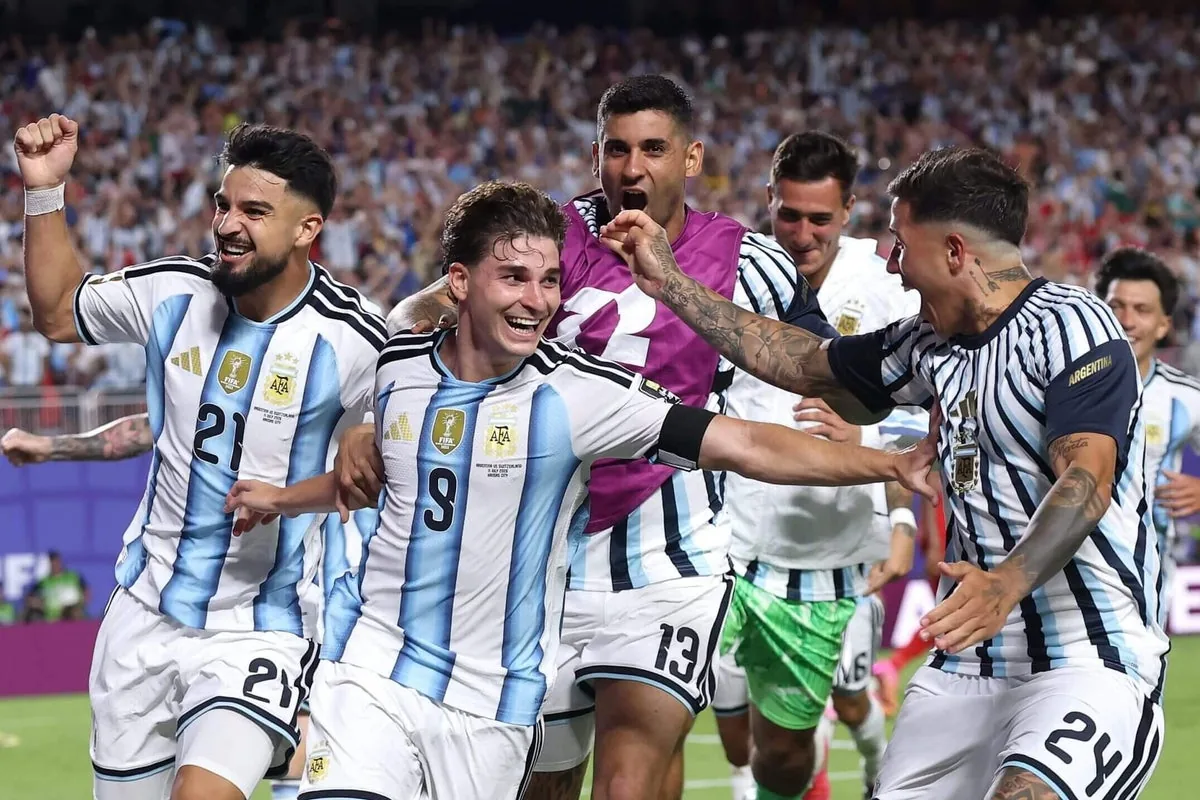
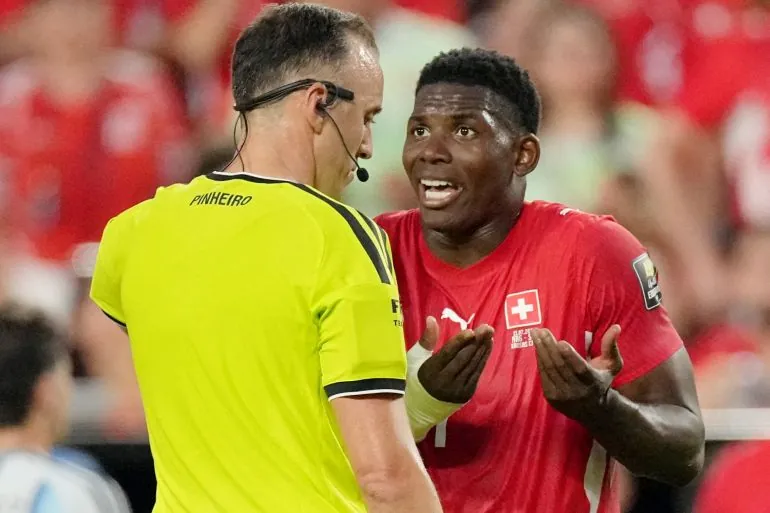
Switzerland forward Breel Embolo was sent off during his country’s World Cup 2026 quarter-final match against Argentina in Kansas City, becoming the first player to receive a red card under a new mistaken identity rule introduced for the tournament. The incident occurred in the 72nd minute of the game, which Argentina ultimately won 3-1 in extra time.
Embolo had previously received a yellow card in the first half. The second caution, which led to his dismissal, was initially issued to Argentina’s Leandro Paredes following what appeared to be a clumsy challenge. However, the Video Assistant Referee (VAR) intervened, prompting referee Joao Pinheiro to review the incident on the monitor. Upon review, the official determined that Embolo had dived, leading to the decision being overturned and Embolo receiving his second yellow card for simulation.
The dismissal came just five minutes after Switzerland had equalized against the defending world champions, leaving Embolo visibly distraught as he left the pitch in tears. Swiss coach Murat Yakin expressed his frustration with the decision, stating there was no reason for a yellow card and that the rule was unacceptable. He added that the intervention was unnecessarily hurtful and destroyed his team’s game, though he acknowledged they had to accept the outcome.
The New Mistaken Identity Rule
The new rule, specifically requested by Fifa’s head of referees, Pierluigi Collina, allows for a decision to be changed if a player is booked or sent off but the foul was actually committed by an opposition player. In this instance, the initial yellow card to Paredes triggered the VAR review for mistaken identity. Had Paredes not been booked, the rule would not have come into play, and Embolo would have remained on the field.
The International Football Association Board (IFAB) defines mistaken identity as when the referee penalizes the wrong player of either team for an offence. The new VAR protocols allow these issues to be reviewed. An earlier application of this rule in the tournament involved USA defender Tim Ream, whose yellow card for a foul on Miguel Almiron was rescinded after VAR review, with Almiron subsequently booked for simulation.
Pundits offered limited sympathy for Embolo. Former Major League Soccer striker Bradley Wright-Phillips commented that he felt for Embolo’s teammates, but not for Embolo himself, suggesting the player had cost his team a potential semi-final spot. Former Jamaica international Jobi McAnuff added that Embolo let himself and his teammates down, noting that while it was simulation, one could still feel sorry for him.
Match Impact and Aftermath
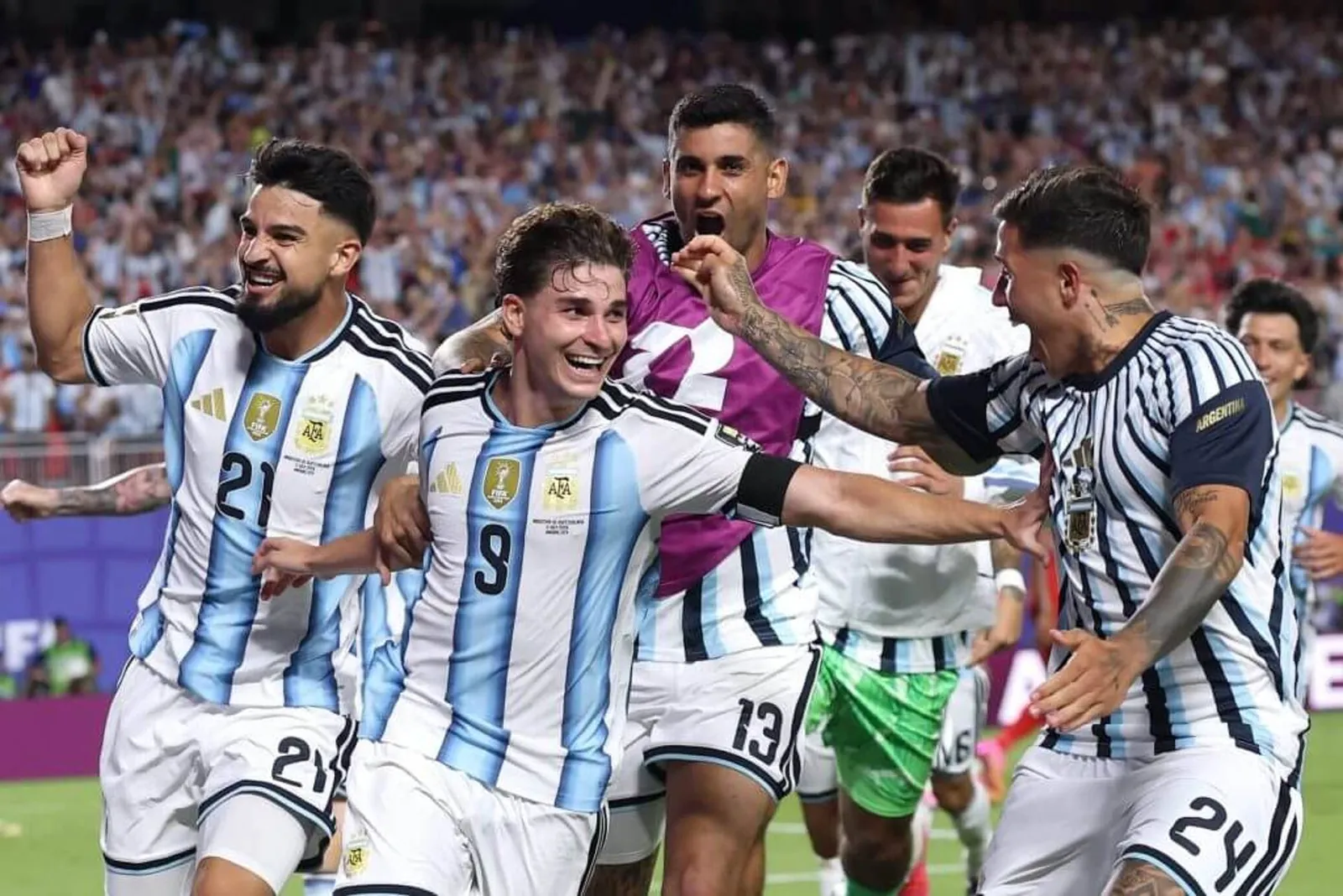
Before Embolo’s red card, the match was evenly poised with the score at 1-1. Switzerland managed to hold the score until the end of normal time, but being a man down ultimately proved costly as Argentina scored two goals in extra time to secure their 3-1 victory. Julian Alvarez scored in the 112th minute, followed by a late third goal from Lautaro Martinez, which sealed Argentina’s progression to the semi-finals.
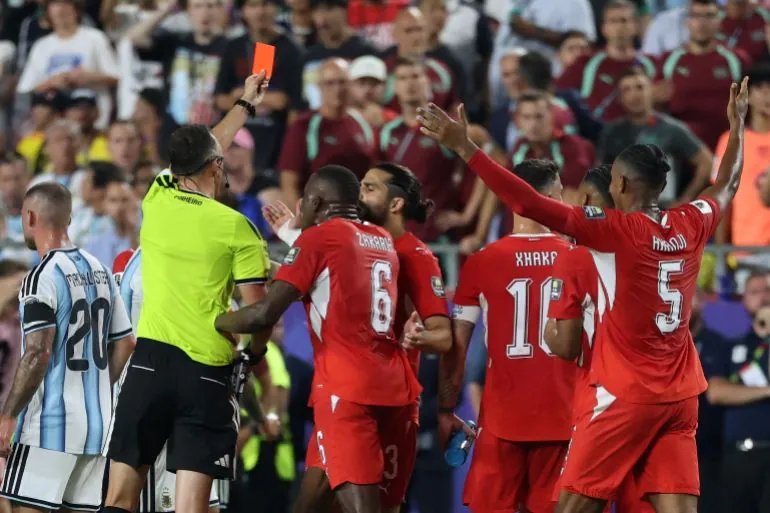
Murat Yakin expressed pride in his team’s passion despite being a man down. Argentina will now face England in the semi-finals. The decision surrounding Embolo’s red card became a significant talking point following the match, with replays indicating no contact had been made by Paredes, and Embolo had thrown himself to the ground. The VAR team in Dallas recommended the review, leading to the reversal of the original decision and Embolo’s dismissal.
The irony of the situation was highlighted by some observers: if the referee had not initially shown a yellow card to Paredes, the incident could not have been reviewed based solely on Embolo’s dive. The initial booking was necessary to trigger the protocol for mistaken identity. Argentina will play England in the semi-finals.
Read Also
Source: bbc.com