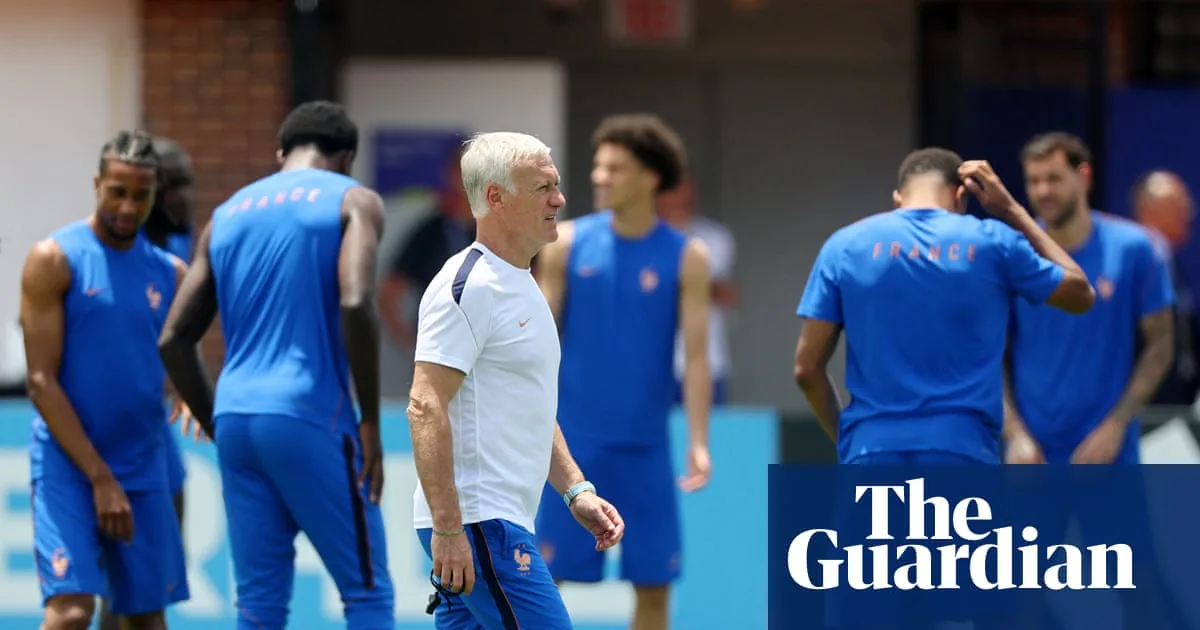
Deschamps’ evolving tactical approach
Didier Deschamps, in his final tournament as national manager, has overseen a tactical shift for France, moving away from the cautious approach that characterized much of his 14-year tenure. This change has led to a more attacking style of play, which has been noted for its speed, incision, variety, and quality. However, this new approach has also brought challenges, particularly when facing strong opposition.
For years, Deschamps faced criticism for prioritizing control and not fully utilizing his array of attacking talent. His teams were often described as pragmatic, focusing on what was deemed best for the players at his disposal. This perspective shifted significantly in the current tournament, where France displayed a more expansive and creative style.
The transformation in France’s play has led to comparisons with the dynamic French teams of the early to mid-1980s. This attacking prowess has been evident throughout the tournament, sparking discussions about the potential that might have been untapped in previous years under Deschamps’ more conservative strategies.
Challenges and midfield dynamics
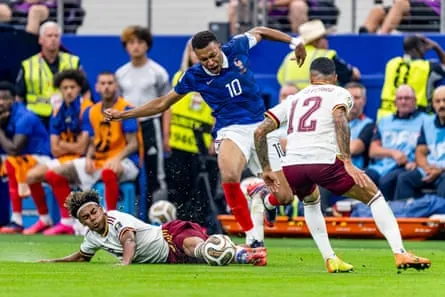
Despite the attacking flair, France encountered difficulties against a strong opponent, particularly in midfield. The team’s structure, often featuring four forwards in a 4-2-3-1 formation, left the central midfield pairing of Aurélien Tchouaméni and Adrien Rabiot vulnerable to being overrun. This tactical setup, while unleashing creative players like Kylian Mbappé, Michael Olise, Ousmane Dembélé, and Bradley Barcola, sometimes resulted in the attacking quartet not receiving the ball frequently enough due to midfield dominance by the opposition.
The decision to commit more players to creativity meant France were susceptible to transitions. In a recent match, a penalty resulted from a foul on Lamine Yamal, highlighting the pressure on the defence when the midfield was bypassed. The question arose whether Deschamps should have reinforced the midfield against stronger opponents by replacing an attacking player with an additional midfielder, potentially shifting to a 4-3-3 formation.
The team’s performance in the Euro 2024 semi-finals against Spain, where France were described as stodgy and inhibited, prompted Deschamps to promise to inject new life into the national team. This commitment led to the current attacking setup, which was previously tested in a Nations League semi-final against Spain in Stuttgart, a match France lost 5-4. This game, however, established a tantalizing template for the team’s future attacking strategy.
Deschamps’ legacy and future
Deschamps’ tenure has been marked by significant achievements, including winning a World Cup, reaching another final, and a semi-final. He also guided France to a Euros final and a semi-final. Reaching the last four of five major tournaments over 14 years is a notable record, particularly given the continuous emergence of extraordinary players under his management.
His decision to step down at the end of the current tournament has been seen by some within the France camp as a form of liberation, allowing him to prepare for a final push without constant scrutiny about his future. This period has allowed him to focus on integrating younger players and fostering clear communication within the squad, ensuring every member contributes effectively.
The bond between Deschamps and Mbappé has been highlighted, with Mbappé’s determination to overcome past disappointments evident. This relationship has been compared to Deschamps’ own experience as captain under Aimé Jacquet in 1998. Deschamps’ ability to adapt and achieve success with different generations of players, in varied tactical approaches, will be a key aspect of his legacy.
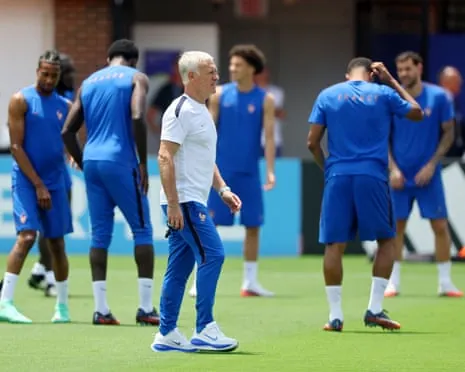
The upcoming match against Spain is anticipated to be a significant test for France’s remodelled side. This encounter will be a crucial measure of whether Deschamps, who has led France to a World Cup semi-final while dealing with personal grief, will be remembered as an all-time great for his ability to win titles with different vintages and in markedly differing ways.
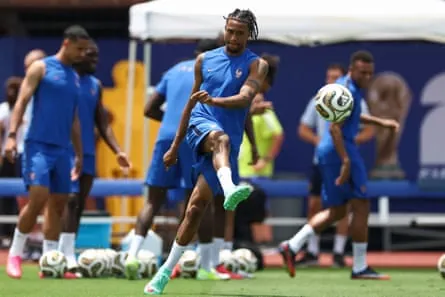
The team’s current form, described as fresh, snappy, and silky, suggests they are capable of outrunning opponents. Deschamps has successfully managed the transition away from key players like Hugo Lloris, Raphaël Varane, Olivier Giroud, and Antoine Griezmann, tuning into a younger generation of talent.
Read Also
Source: theguardian.com