Concerns regarding fairness at the World Cup have intensified, particularly surrounding Argentina‘s path to the semi-finals. A former FIFA referee noted that a new refereeing protocol has contributed to public perception issues, with repeated complaints from opposing teams about decisions involving Argentina.
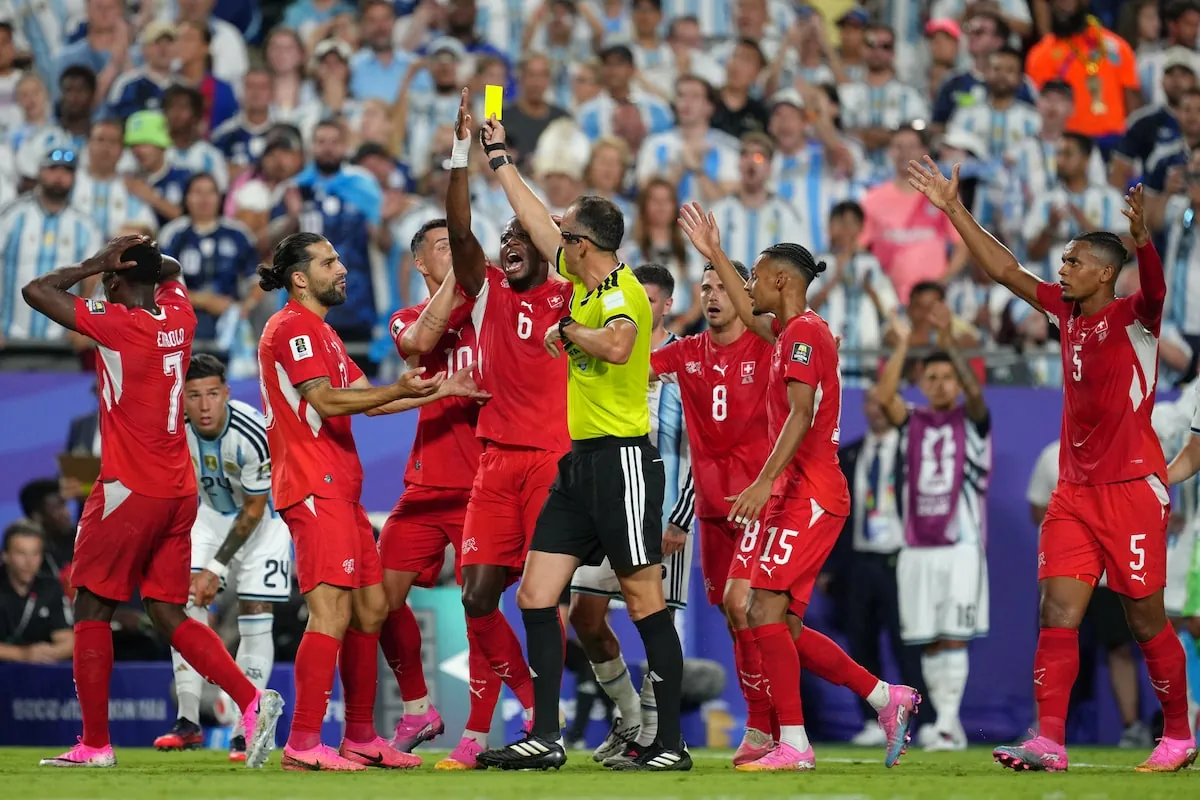
The controversy reached a peak during Argentina‘s quarter-final match against Switzerland. Breel Embolo received a second yellow card for simulation, a decision that Switzerland‘s coach, Murat Yakin, described as “unacceptable.” This incident involved a VAR rule concerning mistaken identity, which is among several scenarios where VAR is permitted to intervene under rules applied to the World Cup.
Christina Unkel, a rules analyst and former FIFA referee, expressed reservations about the protocol’s application. She stated that changing the underlying decision from a free kick in one direction to an entirely opposite decision moves into a “re-refereeing area” that VAR has aimed to avoid. The perception that this protocol benefited Argentina, a team some social media critics have labelled “VARgentina,” has further fuelled fan discontent.
Unkel highlighted that the expansion of this protocol without sufficient testing or understanding of its intended effects creates a volatile situation. She noted that fan confidence is currently eroded, observing a significant increase in discussions about refereeing, not just on social media, compared to previous major tournaments she has covered.
VAR Interventions Under Scrutiny
The debate over refereeing decisions has been building since the group stage. During a match, Algeria called for Lionel Messi to be sent off after an incident involving their captain, Aissa Mandi. Messi remained on the field and subsequently scored a hat-trick. Algeria later filed a complaint regarding the refereeing during that game.
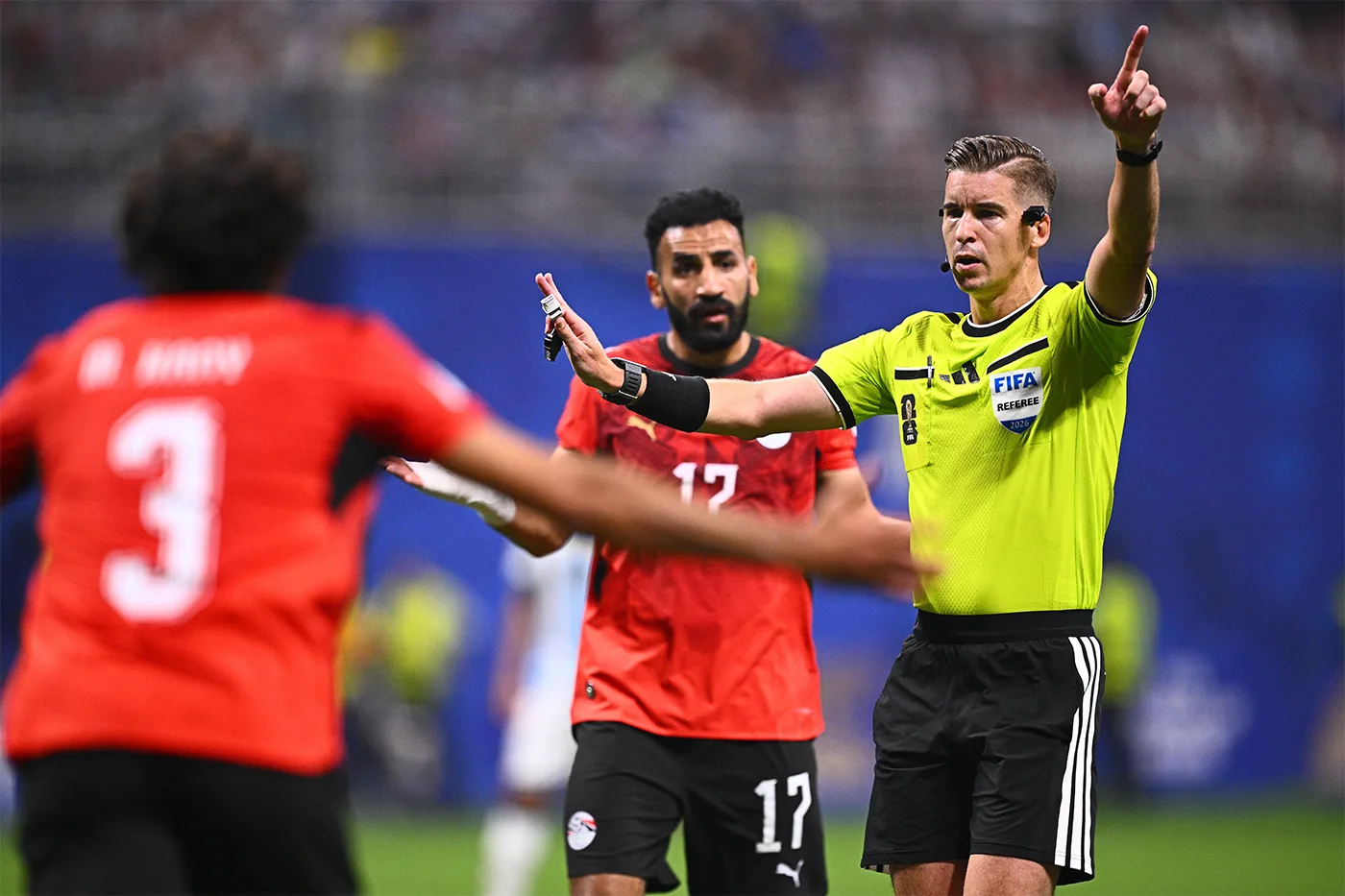
Further controversy arose from Argentina‘s win over Egypt in the round of 16. Egypt had a goal disallowed in the 62nd minute following a VAR check that identified a foul in the build-up. A later appeal for a penalty by Egypt was dismissed before Argentina secured the winning goal in the 92nd minute. The Egyptian FA indicated that several decisions in the game affected the outcome.
Unkel did not identify any specific instances of poor refereeing in these two matches, acknowledging that referees are often blamed when outcomes are not favourable to fans’ preferred teams. However, she suggested that off-field issues have contributed to a lack of trust among supporters.
The handling of red-card cases by FIFA has also drawn attention. U.S. striker Folarin Balogun received a last-minute reprieve from a one-match ban, while England defender Jarell Quansah was given a two-match suspension, leading to renewed scrutiny.
Data on Favourable Calls
The question of whether some teams receive more favourable calls has been a central point of discussion. Brennan Klein, director of the Northeastern NetSI Sport research group, explained that definitively proving referee bias through data is complex. While visual observations might suggest a bad call, the available data primarily records factual events like foul occurrences, player involvement, and location on the pitch.
Despite the challenges in proving definitive bias, trends can be observed in VAR interventions. There have been 35 VAR interventions across 97 World Cup games this year, an increase from 26 in 2022 and 22 in 2018, the year VAR was introduced. Argentina and Mexico have seen the most VAR interventions in their favour, with each benefiting from four changes to foul-related decisions after review. Conversely, Paraguay and Croatia have had the most decisions go against them, with three VAR interventions each.
Klein emphasized that this data does not conclusively prove bias but rather illustrates how different VAR interventions played out. He noted that teams like Argentina and Mexico might top the list because referees initially missed fouls that VAR subsequently identified. This indicates instances where referees made mistakes or missed calls, rather than definitively showing bias towards a particular team.
The VAR system, intended to correct clear and obvious errors, has had a significant impact on the tournament. Mark Geiger, who helped implement VAR in Major League Soccer, stated its original mission was to address “super-egregious errors” with “minimum interference but maximum benefit.” However, the system has evolved, leading to over 100 VAR interventions, encompassing both confirmed and overturned decisions, through the end of the round of 16.
Antonio Vuksanovic of Sofascore noted that overturned decisions are occurring at a rate of approximately 0.5 per match, which is higher than the previous World Cup and recent club seasons. Unkel believes that while VAR decisions might be technically correct by law, they sometimes go against the “spirit of the game.” She advocates for referees to have discretion to ignore or overrule VAR when common sense suggests it. Egypt coach Hossam Hassan also stated that what happened to his team was not fair.
England coach Thomas Tuchel expressed concerns about VAR decisions, including a penalty call against captain Harry Kane and a red card for defender Jarell Quansah in his team’s win over Mexico. He described the rulings as being overturned “in a very questionable way,” adding that the system is “erratic” and “unreliable.”
The semi-automated offside system, which uses player-tracking cameras and data from the match ball to determine player positions, is another technological advancement in use. Geiger, now general manager of the Professional Referees Organization (PRO), maintains that the core question for VAR should be whether the referee was “clearly and obviously wrong,” rather than striving for perfect calls.
The frequent use of VAR and other technologies has led to moments where celebrations for goals are cut short by reviews, impacting the drama of the game. For example, Croatia‘s tournament ended after a goal was disallowed due to an imperceptible touch, and Iran had three goals disallowed by VAR in the tournament.
Read Also
- Toronto Blue Jays' Dylan Cease to start All-Star Game for American League
- Winnipeg Jets prospect Viggo Bjorck leaves Swedish club for North America
- Maple Leafs' traded goalie Dennis Hildeby recounts missing part of World Cup match due to trade call
- Noskova reflects on Wimbledon triumph and future aspirations
Source: theglobeandmail.com