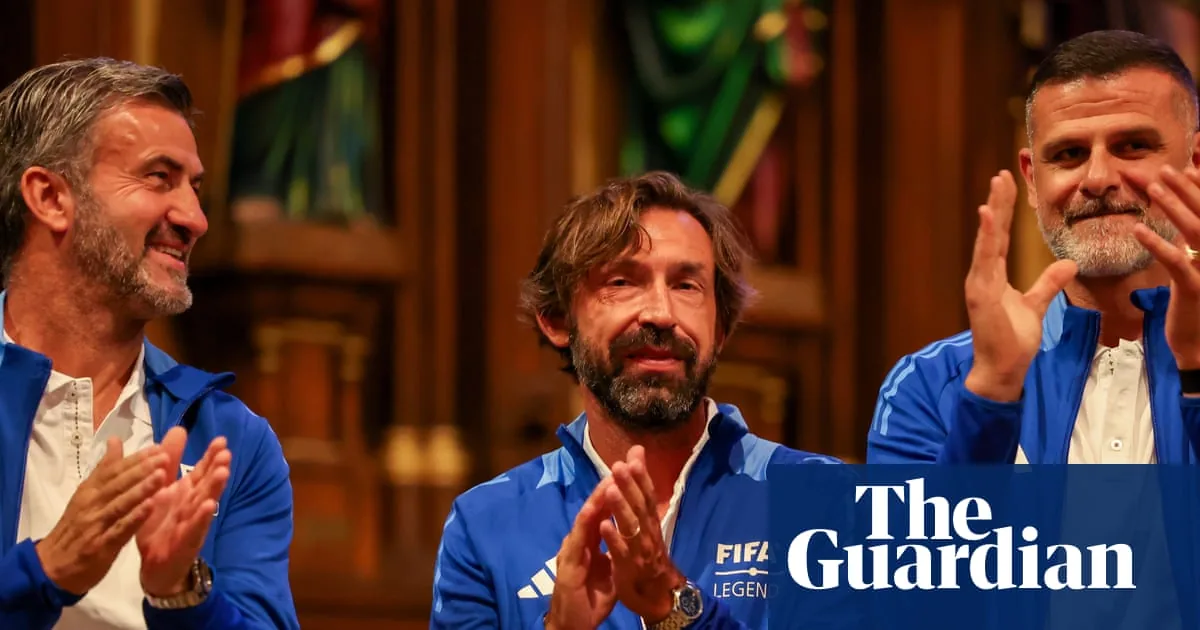
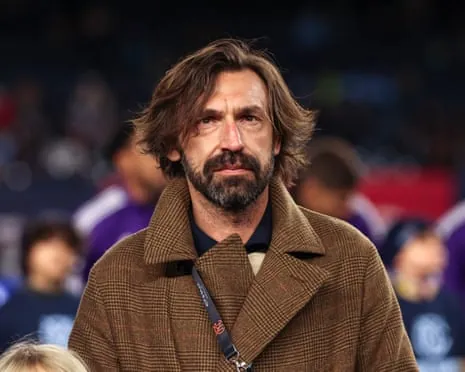
Andrea Pirlo has confirmed he is no longer a candidate to coach the Italian national side. This decision follows controversy regarding his commercial links to a Russian betting company, Fonbet. Pirlo’s prospective appointment had been widely anticipated, though not officially confirmed by the Italian Football Federation (FIGC).
The situation has also led to the reported resignations of two senior figures within the FIGC: Paolo Maldini and Leonardo. Maldini, who was appointed technical director just over two weeks prior, and Leonardo, his adviser, had been tasked with identifying a new head coach and revitalizing the team after three consecutive failures to qualify for the World Cup.
Controversy over commercial ties
Criticism of Pirlo’s potential appointment intensified over the weekend from several Italian politicians. They highlighted Pirlo’s role as a global ambassador for Fonbet, a company that has sponsored sporting events involving veterans of Moscow’s war in Ukraine and organized events in Russia where Pirlo appeared alongside pro-Kremlin figures.
Carlo Calenda of the centrist Azione party stated that individuals promoting Russia after 2022 should not hold national office. Pina Picierno, a vice-president of the European Parliament, commented that Italian football required a “cultural, ethical and managerial revolution,” suggesting Pirlo’s selection would move in the opposite direction.
Pirlo addressed the situation in an Instagram post on Monday, expressing bitterness over the debate surrounding his name. He clarified that any “professional collaboration” in his capacity as coach for United FC in Dubai was “exclusively of a commercial and sporting nature.” He added that attributing a political meaning to this collaboration would be assigning him beliefs he has never expressed.
The Russian ambassador in Rome, Aleksey Paramonov, offered support to Pirlo, noting it was “saddening” that, despite his contributions to world sport, he was being ostracized in his own country. Scrutiny of Pirlo’s ties to Fonbet increased last spring after he participated in an event in Moscow, where he and former teammate Marco Materazzi signed autographs. Pro-Kremlin pop star Shaman also performed at this event.
Ukrainian skeleton slider Vladyslav Heraskevych criticized Pirlo for appearing at the Luzhniki event, which reportedly occurred on the same day as a significant Russian attack on Ukraine. Heraskevych also expressed disappointment over Pirlo’s appearance alongside Russian footballer Artem Dzyuba, who had publicly expressed pride in being Russian following the war in Ukraine.
Search for a new coach continues
The Italian football community has been undergoing a period of self-reflection after the team’s failure to qualify for a third World Cup earlier this year. This included a loss on penalties to Bosnia-Herzegovina in April, which led to coach Gennaro Gattuso stepping down and a reshuffle within the FIGC.
Prior to Pirlo, the FIGC had unsuccessfully approached Pep Guardiola and Carlo Ancelotti for the coaching role. Pirlo was reportedly a third choice for the position. Maldini had preferred Pirlo over other candidates like former Italy coaches Roberto Mancini and Antonio Conte, viewing him as someone adaptable to new policies and willing to promote younger players in an attack-minded system.
With Pirlo no longer in consideration and the resignations of Maldini and Leonardo, the federation faces an immediate crisis. The newly appointed federation president, Giovanni Malagò, now oversees a situation without a clear national team strategy. Mancini and Conte are once again being discussed as potential candidates for the coaching job. Mancini previously led Italy to Euro 2020 victory before failing to qualify for the World Cup in Qatar and subsequently taking on a coaching role in Saudi Arabia. Conte coached Italy to the quarter-finals of the 2016 European Championship.
Another option being considered is former Inter Milan coach Simone Inzaghi, who is currently coaching in the Saudi league. The next coach will be Italy’s fourth in as many years. Italy is scheduled to play in the Nations League in September and October, facing Belgium, Turkey, and France.
Source: bbc.com